By Joyce Piñero
“Everything you ever want is on the other side of fear,” is DTM Patty Wyatt’s mantra. The words hang on her bathroom mirror, reminding her every day.
Patty attended Toastmasters for the first time in 1998, but was so paralyzed by fear that she did not return for twenty years. In 2018, she decided to try again. She knew she needed it personally and for her career. She stood at the door, meditating, trying to find the courage to walk through the door. When she was asked, as a visitor, to state her name, she panicked and almost walked out. She stayed, and she returned. It didn’t get any easier.
Shortly after returning to Toastmasters, Patty was officially diagnosed with social anxiety. Every time she came to the club, she’d medicate before entering the meeting. “I medicated so the negative person could go away and the confident person emerge.”
She was terrified to attend meetings, but she knew she needed to push past the fear. She returned and challenged herself to do “one more thing”: her first speech; her first club role; her first club officer position. She knew that if she was committed to doing something she would do it. She committed so she’d go and participate.
“It has never been about my comfort zone, it’s always about doing one more thing, one more thing, one more thing…”
During her second year in Toastmasters, she entered the speaking contest. She didn’t win the contest, but she won that day’s battle with fear.
Her personal policy became, “Lean in and say yes.” “Yes” to a second speech contest. “Yes” to every club who asked her to speak. “Yes” to leadership roles at the club, area, and district levels. “Yes” when she was asked to speak at work. “Yes” to becoming a Distinguished Toastmaster. “When someone asks me to speak, I impulsively say ‘no.’ But I have to say ‘yes.’ I can’t grow without it.”
In her fourth year of Toastmasters, Patty made a switch in mentality. Not to saying “Yes” but to the reason she said “Yes.” Instead of Toastmasters simply being a place to overcome her personal anxieties, it became a place where she could grow professionally. She began aligning her Toastmasters goals with her annual work appraisals. She worked on pathways that directly affected her work performance.
Her organization noticed. They broadened her work opportunities. She was asked to speak at work. She was still anxious, but she leaned in and said, “Yes.”
After seven years, Toastmasters is no longer about herself and her personal growth, although it continues to stretch her. It is about helping others, who, like her, are anxious. She chooses people in the club to mentor who look scared to enter the room. She’s had the opportunity to mentor nine individuals and help them overcome their fear of public speaking. She’s also started noticing individuals at work who struggle with anxiety. She forms relationships and unofficially mentors them.
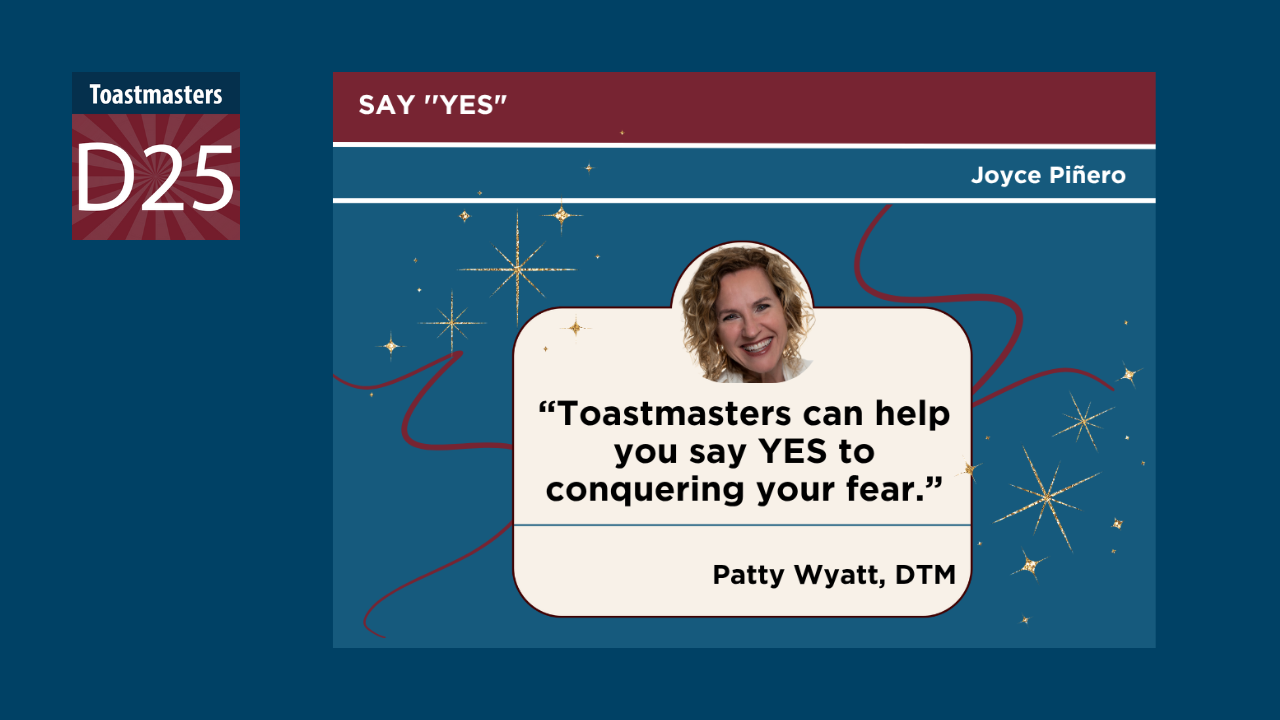
Patty does not want anyone to limit the person they are because of anxiety. She believes there are no limitations on who you can become when you overcome it. Toastmasters can help you say “Yes” to conquering your fear.